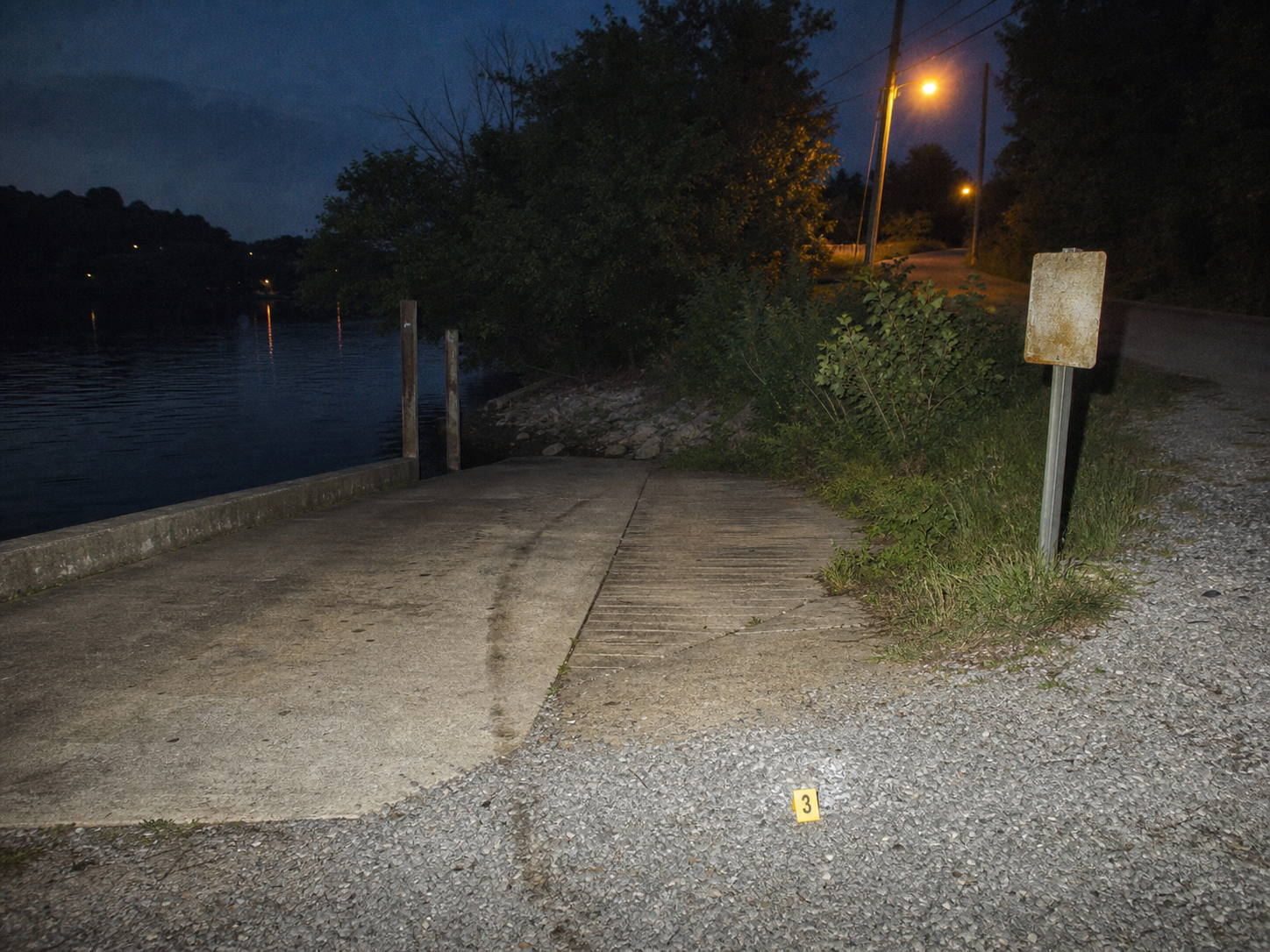
 PUBLIC BOAT RAMP · 08/12/06
Coming soon · Private playtest recruiting
Your next cold case will call you.
Work an authored investigation through a laptop case desk and your real phone. Question people who answer back, test the evidence, and decide which version of the truth survives.
The performance responds to you. The facts and solution never move.
Private test buildCASE 001
PUBLIC BOAT RAMP · 08/12/06Conviction held for twenty years. The evidence did not.
INCOMING CALLUnknown witness
00:01THE CASE DOES NOT STAY INSIDE A BROWSER
- 01 Live voice calls
- 02 Text messages, if you opt in
- 03 Records & email
- 04 A final hearing
For people who cannot stop asking why
Do more than follow the story. Interrogate it.
If the part you love is solving the mystery, reading the room, and finding the forensic detail that changes everything, this is your side of the screen.
Each case is a complete fictional investigation with a fixed timeline, human motives, evidence provenance, and one authored truth. Suspense comes from what you choose to notice and what people choose to tell you.
“Every file begins as someone else’s version of what happened.”Investigator’s field note


How it plays
The investigation unfolds in your time.
Set the hours you are available. Sit down at the case desk. Between sittings, witnesses reconsider, records arrive, and your phone may ring.
- 01
Open the archive
Rummage through the original materials in any order. Read the reports, examine the media, and find the first fracture in the official story.
- 02
Question people
Call witnesses on your phone and ask what matters to you. Test recall, hold back evidence, or press on a contradiction. They remember how you treat them.
- 03
Build the chain
Connect documents, testimony, and contradictions on your desk. A suspicion is not enough; your conclusion has to survive scrutiny.
- 04
Commit to the truth
Name the person you believe is responsible and submit the evidence that proves it. The hearing is final. Being wrong is still an ending.
The case desk
Evidence archive, contact ledger, call transcripts, timeline, and a freeform investigation board built to feel like a working investigator’s space.
The people in the case
Calls, and texts if you opt in, arrive through familiar channels. What happened in one conversation carries into the next, sometimes hours or days later.
Live characters
Ask the question the writer never predicted.
There are no dialogue choices to select. Characters perform each conversation live, remember your history, and protect the things a human being would protect.
- Ask naturally. Open questions, unexpected details, and direct accusations are all legitimate moves.
- Pressure has a cost. Push too early and a witness may stop answering. Earn trust and a different story can surface.
- Memory is personal. Each character remembers only their history with your investigator, even when many people are playing the same case.
The fair-play promise
The game will not move the truth to meet your theory.
The solution exists first
Every case is written backward from a fixed crime, timeline, and chain of proof. The mystery is never generated around the player.
The evidence is in the case
Every clue needed to reach the truth is available before the reveal. Red herrings have real explanations; your time is never discarded.
The people are not content
Cases are invented and clearly disclosed as fiction. The design borrows the rigor of real investigation without exploiting a real victim’s life.
Help us open the first case
We are recruiting private playtesters.
Case 001 is playable now in a controlled preview. We need careful people who enjoy mysteries and will tell us exactly where the experience stops feeling natural.
- TIME5–6 hours across several sittings
- GEARA laptop and a phone
- MISSIONFind the truth, then help us find the friction
The full experience
A mystery with room to breathe.
- Status
- Coming soon · Private playtest recruiting
- Format
- Interactive cold-case investigation
- Play time
- 5–6 hours across multiple sittings
- You need
- A laptop, a phone, and curiosity
Case notes
Before you take the file.
Is Chain of Custody based on a real crime?
No. Every case, place, and character is fictional. The investigative methods and evidence standards are grounded in real practice, but no real victim’s story is being turned into entertainment.
What makes it different from a true-crime show or podcast?
You are not watching someone else solve the case. You decide who to call, what to ask, which claims to test, what evidence to connect, and when you have enough to make an accusation.
Are the characters controlled by AI?
Their live performances are generated so they can answer questions you actually ask. The mystery is not generated: every fact, timeline, document, secret, and solution is authored and locked before the case opens.
Does the game really call my phone?
Yes. Voice calls happen on your real phone, and characters can text you too if you opt in to texts, which is optional. During setup, you choose the days and hours when the case may reach you. Calls may be recorded and transcribed for gameplay, with disclosure and consent before play begins.
Can the solution change during play?
Never. The truth is fixed. You can miss it, misread it, or accuse the wrong person, but the game cannot move the answer to make your theory correct.
How do I become a playtester?
Read the private-playtest briefing at chainofcustody.party/playtest, then fill in the short request form at play.chainofcustody.party/join. We are looking for thoughtful mystery and true-crime fans who will tell us the first moment that feels confusing, broken, or unbelievable.
Coming soon
Someone has decided to talk.
Case 001, The River Deal, is in private testing. You can help decide when it is ready to open.
Join the private playtest